
Ulcerative colitis is a condition rooted in oxidative stress and damage to the colon's epithelial lining, caused by hydrogen peroxide. Recognizing this groundbreaking research involves shifting the focus from viewing UC as a condition caused by a defective immune system (for which there is no evidence) to an evidence-based approach focused on cellular metabolism and redox medicine. This new evidence-based approach offers genuine hope for long-lasting disease-free outcomes, as opposed to the temporary relief provided by immunosuppressants.

The area affected by ulceration is the inner superficial lining of the large intestine, known as the colonic epithelium or mucosal layer. This delicate mucosal layer is highly susceptible to damage from inflammation, which leaves the fragile microscopic blood vessels located just beneath it unprotected and exposed. Over time, these small blood vessels may rupture, leading to bleeding into the lumen of the colon, where stool is formed (the lumen of the colon).
For many years doctors suspected that ulcerative colitis might be due to something wrong with the immune system and classified UC as an autoimmune disease or an abnormal response of the body’s immune system or simply “dysregulated immunity”. The good news for UC suffers is that there is absolutely no evidence for any immune abnormality preceding the onset of UC.

The absence of any immune abnormality preceding the onset of UC is critical because it indicates that UC is not a primary immune mediated disease (not caused by the immune system). In other words, If no immune abnormalities are present prior to the onset of UC, then the immune system cannot be the cause of this condition. Additional evidence, such as the high frequency of spontaneous remission (up to 50%), further reinforces the conclusion that the immune system is not the cause of UC, as immune abnormalities do not typically exhibit patterns of relapse and remission, which are characteristic of UC. Additionally, people with UC are not at risk of developing common infections unless they are given immunosuppressive drugs. Furthermore, tests of global immune function (called immediate and delayed hypersensitivity) are completely normal in individuals with UC.
After the immune system seemed unpromising as a cause of UC, investigators focused their efforts on the colonic microbiome as a possible initiating factor. The colonic microbiome includes all the living organisms that reside in the large intestine. The vast majority of the organisms are bacteria, collectively called the colonic flora. However, despite years of research there is no evidence that the colonic flora or any portion of the colonic microbiome cause UC.
That leaves us with one last possibility; the colonic epithelium itself. Unlike the colonic microbiome, which is based on the well-known science of microbiology, relatively little is known about the colonic epithelium. And in contrast to the decades of research on the immune system, very little research has been focused on the epithelial lining of the colon.
A microscopic view of the cells lining the inner surface of the large intestine is shown below (Figure 1). These cells are called colonic epithelial cells. Like all cells of the body, colonic epithelial cells produce hydrogen peroxide (H2O2) as a normal toxic by-product of cellular metabolism. H2O2 must be immediately neutralized to prevent cell damage. If produced in excess, H2O2 easily diffuses through the colonic epithelial cell membrane (1) to the extracellular space where its unique properties of long life, potent oxidizing power, and the ability to attract white blood cells (chemotaxis) combine to promote oxidative damage of colonic epithelial tight junctions while attracting neutrophils into the colonic epithelium.

Figure 1.
A. Large intestine or colon inside abdominal cavity; B. Section of colonic epithelium, which is composed of colonic epithelial cells that line the inner surface of the colon; C. Enlarged view of colonic epithelium showing the colonic epithelial cells surrounding a central core called the crypts of Lieberkühn; D. Actual biopsy of colonic epithelium showing the colonic epithelial cells surrounding the crypts of Lieberkühn.
Tight junctions are the glue that hold cells together and continued H2O2 exposure leads to oxidative disintegration of this tight junctional glue and increased paracellular permeability (leaky gut). A leaky gut allows bacteria to penetrate through the colonic epithelium into the sterile layer just below called the lamina propria. The presence of bacteria and H2O2 in the lamina propria attracts white blood cells (neutrophils) into the colonic epithelium where they accumulate in microscopic indentations called crypts of Lieberkühn. This is what leads to colonic inflammation and ulcerative colitis. In other words, hydrogen peroxide leaking out of the individual cells lining the inner surface of the colon (called colonic epithelial cells) attracts white blood cells (called neutrophils) into this inner surface lining of colonic epithelial cells, which collectively make up the colonic epithelium. This leads to colonic inflammation and ulcerative colitis.
Despite these gaps in our knowledge, small groups of insightful researchers compiled evidence implicating the colonic epithelium as the source of a chemical that caused UC as far back as the late 1940s.
In the 1960s animal studies in mice showed that hydrogen peroxide enemas caused a colitis that was indistinguishable to human UC. In the 1970s hydrogen peroxide was identified as a by-product of cell metabolism indicating that it was produced inside human cells. In the 1980s hydrogen peroxide enemas in humans were reported to cause UC and, in 2005, based on this and other evidence, it was postulated that excess colonic epithelial hydrogen peroxide was the cause of UC. Dr. Pravda called this the Radical Induction Theory of Ulcerative Colitis.
Experimental evidence supporting excess colonic epithelial hydrogen peroxide as the cause of UC appeared in 2007 with studies showing that hydrogen peroxide is highly elevated in the colonic epithelium of individuals with UC in remission. This is highly significant because the normal hydrogen peroxide level in colonic epithelial cells is close to zero.
Hydrogen peroxide is very reactive and causes inflammation by damaging the delicate epithelial lining of the colon and attracting white blood cells called neutrophils into the colonic epithelium (the inner lining of the colon). Once this protective layer keeping the stool inside the colon is damaged, bacteria normally present in the stool gain access to the deeper layers of the colonic tissue. When this occurs the immune system reacts in a normal fashion to “plug the leak”. This results in the mucosal inflammation that we see in UC.

Thus, we have come full circle from the insight of researchers who compiled different pieces of the puzzle during the latter half of the 20th century leading to a new interpretation of their data in light of modern advances in metabolism and biochemistry. This has spawned a new theory of UC, which received its first experimental confirmation in 2007. All that remains is for research organizations to repeat the studies and confirm that high levels of hydrogen peroxide are indeed present in the colonic epithelium of individuals with UC. If this finding is confirmed by other laboratories, we can safely say that the cause of UC is no longer a mystery and this scourge can finally be eliminated.
Unfortunately, virtually all research into the cause of ulcerative colitis is focused on the immune system or the colonic microbiome. Because history has shown these lines of research to be dead ends, it is imperative that this new evidence reach the people that matter— patients and families battling UC. We are here to provide evidence-based answers to questions about the cause of UC, how diet and environmental factors can worsen this condition and, most importantly, how we can take control of UC so it doesn’t control us.
If your doctor suspects that you might have ulcerative colitis he will take a history and perform a physical examination. He will also order some blood tests. However, since the symptoms and signs of UC such as abdominal discomfort, diarrhea and rectal bleeding are not specific enough to make a diagnosis; your doctor will likely perform a colonoscopy.
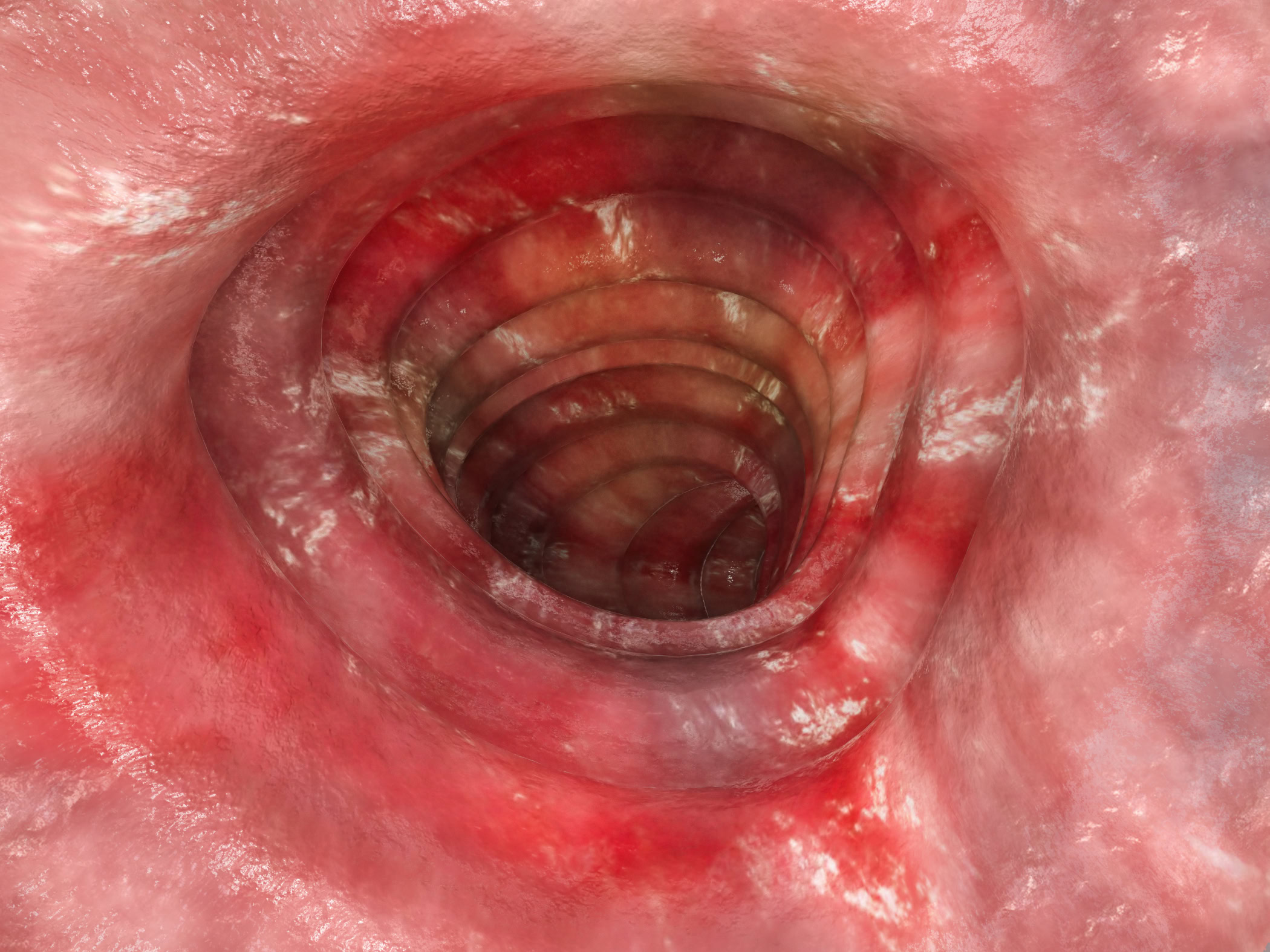
During this procedure a slender fiber-optic illuminated tube is inserted into the rectum to look at the inside of the colon. During the colonoscopy procedure the inner (epithelial) surface lining of the colon may appear reddened, friable and ulcerated. Although this is the appearance you expect to see with ulcerative colitis, it is still not specific enough to make a diagnosis.
The next step is obtaining a small piece of tissue, called a biopsy, which can be examined at higher magnification under the microscope for certain changes that are more specific to UC. In areas of active inflammation, a large number of white blood cells, called neutrophils, can be seen to accumulate within the inner (epithelial) surface lining of the colon.
Hydrogen peroxide has a very powerful ability to attract neutrophils, which then stream right into the mucosal surface lining of the colon (1). We know that hydrogen peroxide is elevated because it has been measured in colonic biopsy samples in individuals with UC (2). The presence of neutrophils in a characteristic distribution within the epithelium combined with the right clinical history allows the pathologist to make a diagnosis of ulcerative colitis.
Hydrogen peroxide is also a very reactive chemical that can damage the delicate epithelial lining allowing bacteria in the stool to penetrate the normally sterile tissue of the colon itself. When this tissue damaging effect of hydrogen peroxide is combined with its ability to attract white blood cells (neutrophils) into the epithelial lining of the colon the end result is a very high accumulation of white blood cells (neutrophils) streaming into the inner epithelial surface lining leading to inflammation and ulcerative colitis. This can show up in biopsy samples as micro-abscesses when high numbers of neutrophils fill up the crypts of Lieberkühn, which are microscopic recesses or chambers that make up the inner colonic surface epithelium. This is illustrated in the diagram below. (Figure 2)
1. Ion channels steer neutrophils towards a source of hydrogen peroxide. Sci Rep. 2021;11:9339.
2. Impairment of mitochondrial acetoacetyl CoA thiolase activity in the colonic mucosa of patients with ulcerative colitis. Gut. 2007 Nov 1;56(11):1543-9.

Figure 2.
This figure shows the sequence of events that occurs in the colonic epithelium leading to ulcerative colitis. Hydrogen peroxide (#1) is secreted by colonic epithelial cells into the extracellular space (#1). Hydrogen peroxide then attracts white blood cells (neutrophils from the blood vessels into the extracellular space (#2) while at the same time damaging the “glue” that holds cells together allowing bacteria to invade intro the colonic tissue (#3). This leads to colonic inflammation and ulcerative colitis( #4).
Initially Hydrogen peroxide begins to leak out of the colonic epithelium (cells lining the inner surface of the colon) and penetrates the surrounding tissue. After some time, the hydrogen peroxide will damage the epithelium. The combination of tissue damage and hydrogen peroxide’s ability to attract neutrophils causes microscopic openings or discontinuities in the surface epithelium that allows bacteria to invade the epithelium and, at the same time, attracts neutrophils, which stream into the epithelium causing inflammation and ulcerative colitis.
Current treatment of ulcerative colitis is targeted at resolving the inflammation and keeping it from returning. Successful treatment of inflammation is called induction because the treatment has “induced” remission, which is the period of time following induction during which inflammation is absent or under control. Relapse (also called a flare) occurs when inflammation returns.
For a long time there were no medications to treat UC. This changed with introduction of Sulfasalazine and corticosteroids for the treatment of ulcerative colitis in the 1950s, which marked the very first time effective therapy was available to treat this disease. Since then, all medications approved for the treatment of UC have been derivatives, in either form or function, of these two basic medications. Thus, since the mid-20th century there have been no fundamentally new medical therapeutic approaches to treating UC.
Surgery is another form of treatment for UC. Surgical removal of the large intestine (colectomy) is reserved for individuals who are refractory (don’t respond) to medical therapy. The percentage of individuals with UC that eventually require surgery is reported to be between 20-40% depending on the source one reads.
The high percentage of colectomies reflects the failure of medical therapy to adequately treat the disease. For nearly three-quarters of a century, the focus has simply been to treat the inflammation. And for all that time, the inflammation keeps coming back in virtually everyone treated for UC. It doesn’t take a rocket scientist to realize that simply treating the inflammation alone will never lead to long-term remission. By ignoring the underlying process leading to inflammation, ulcerative colitis can never be effectively treated or cured.
The reliance on drugs and surgery to treat UC, in addition to the erroneous belief that UC is an incurable auto immune disease has, unfortunately, overshadowed the profound importance of diet and lifestyle. Evidence for supporting the critical role of diet-and-lifestyle and its contribution to the initial appearance of UC and subsequent relapse have either been dismissed due to lack of understanding or regarded as study error.
For example, red meat is associated with UC relapse. This occurs as a result of its high iron content, which can react with substances in the gut to generate highly reactive oxygen radicals that can damage the inner lining of the colon leading to inflammation. Another example is alcohol, which can be metabolized to hydrogen peroxide in the colonic epithelial lining, leading to relapse. Stress is a common lifestyle component causing relapse. Stress causes the release of large amounts of a chemical called serotonin in the colon. Serotonin is subsequently metabolized to hydrogen peroxide by an enzyme within the colonic epithelial cells. When stress is high and too much serotonin is released the large amounts of hydrogen peroxide being produced can leak out of the colonic epithelial cell and lead to a relapse.

In summary, ulcerative colitis does not suddenly appear for no reason, and relapses don’t just occur out of the blue. Foods or conditions that cause relapse facilitate the production of hydrogen peroxide in the colon. Anything that facilitates the production of hydrogen peroxide in the body is called an oxidative stressor, whose effect on the body to increase hydrogen peroxide is called oxidative stress.
History has taught us time and again that new ideas in medicine come from unlikely sources. This is not a coincidence. Oftentimes, it’s only those on the outside who can think outside the box. As a trained clinical immunologist, Dr. Pravda could not find any evidence that would lead him to believe that individuals with UC have anything wrong with their immune systems. This is a completely disruptive belief that led him down an entirely different pathway, which ultimately resulted in the identification of hydrogen peroxide as the cause of UC.
In other words, the immune system is doing what it’s supposed to do given the circumstances it finds itself in. Once he understood that, he was able to free himself from all the clutter in all the fancy textbooks and focus on understanding the underlying disease process, which culminated in a new mechanism of disease; the Radical Induction Theory of Ulcerative Colitis. This theory predicts that oxidative stressors are causing high levels of hydrogen peroxide to be produced in the colon. It also predicts that excess hydrogen peroxide can be reduced by eliminating exposure to oxidative stressors through diet and lifestyle changes combined with taking what are called ‘reducing agents.’
This theory foretells the possibility of a new kind of therapy that can safely and successfully treat UC. The Radical Induction Theory also predicts that UC is a curable disease and colonic health can be restored to what it was prior to developing the disease.
Individuals have healed from their refractory ulcerative colitis by addressing its actual root cause: an overproduction of hydrogen peroxide in the colon. Dr. Jay Pravda explains what actually causes ulcerative colitis: and what needs to be done to cure this disease, rather than slapping on another band-aid with immunosuppressive drugs.
UC is not an auto-immune disease—and it is not an incurable disease.

Learn more about how oxidative stress presents in the body, and how it leads to the initial emergence (and re-occurence) of UC.

A curation of the most prominent, groundbreaking reports and studies that have been published on UC to date.

Watch a series of videos dedicated to the groundbreaking research on UC that has been in development for decades.
All content on this website is for informational purposes only. Do not use or rely upon any information contained herein as a substitute for professional medical advice, diagnosis, or treatment- always consult with your doctor. The creator(s) disclaims all liability for any injury, loss, or damages, whether direct, indirect, implied, consequential, or otherwise, arising out of or in connection with the use of the information contained therein. By using this website, you agree to the terms of this disclaimer.